All TiersCase study
Ministry Bridge: a web platform for churches and their ministries
The problem
A church's ministry work ends up scattered across shared drives, documents and other tools, and Ministry Bridge is a portal meant to bridge those gaps.
It began with one church whose seminary residents did their work in Google Drive and similar tools. I built the first module, a learning management system, along the lines of platforms like Canvas, but shaped around that church's own requirements.
What is live
- I built it on my own, over more than two years.
- I own the code.
- It is in use by a church today, for its seminary residents.
- It is becoming multi-tenant, so other churches and ministries can run their own.
What it does
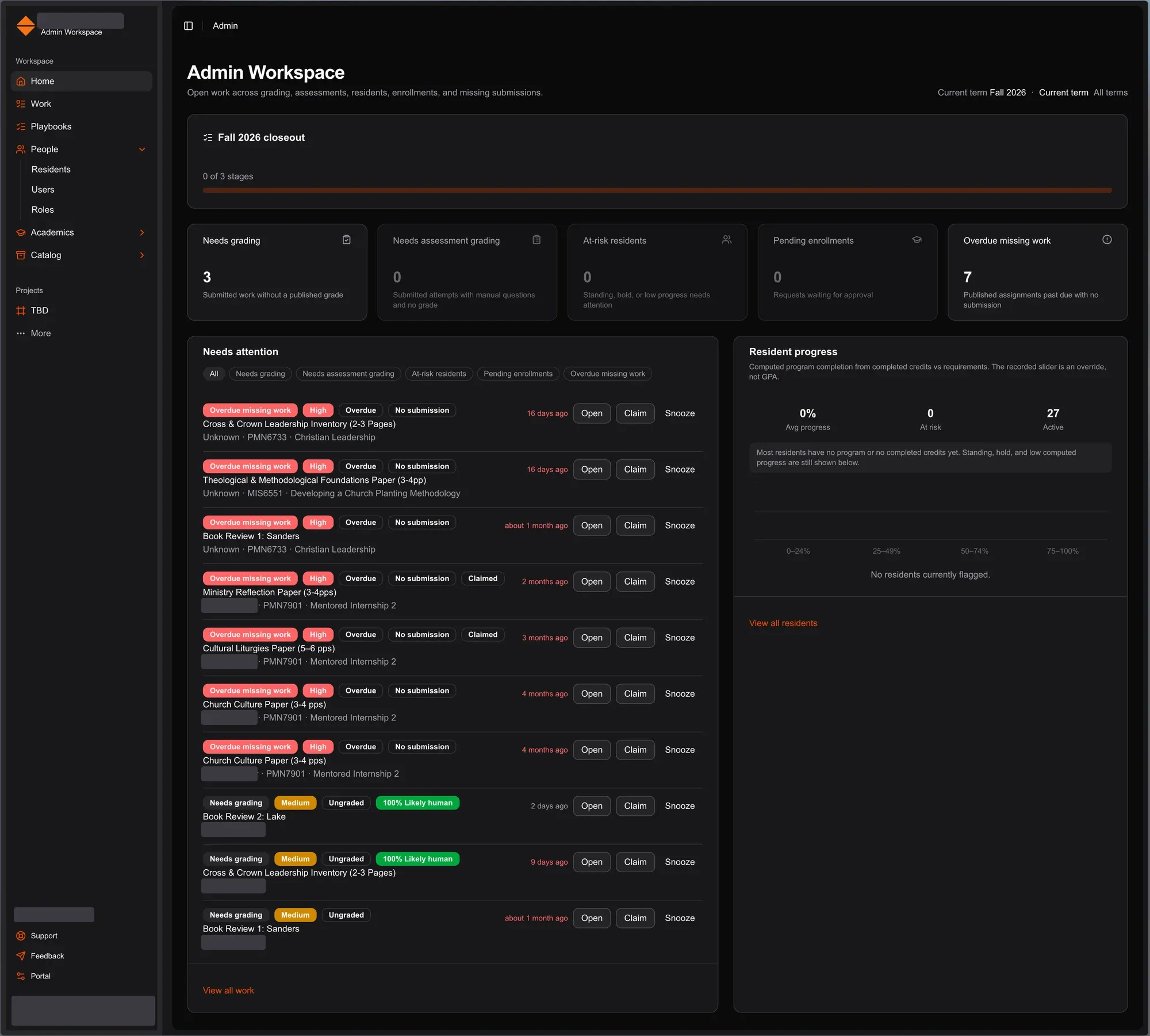
The learning management system is the first module, and it covers everything below. More modules for churches and their ministries are planned.
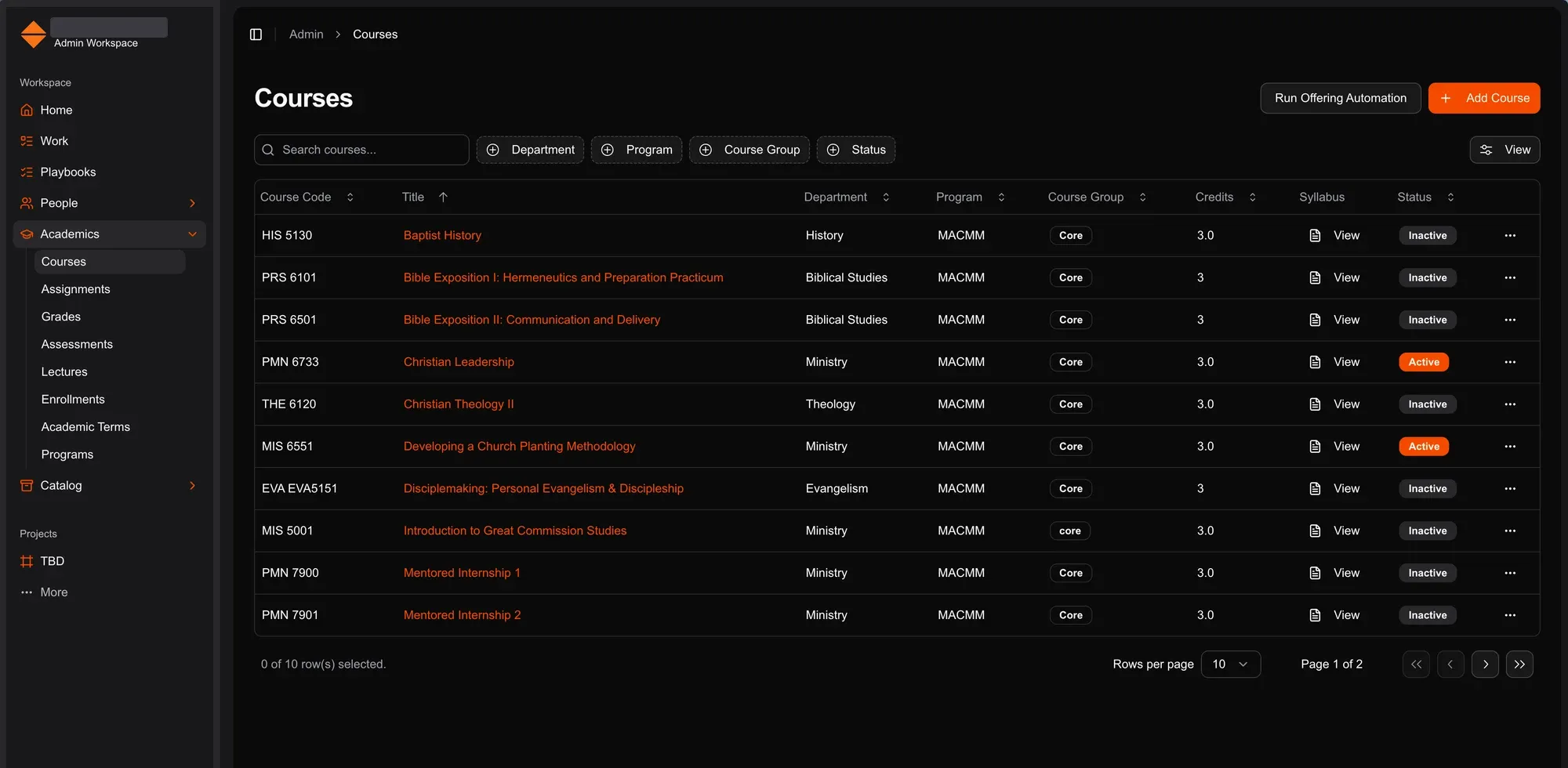
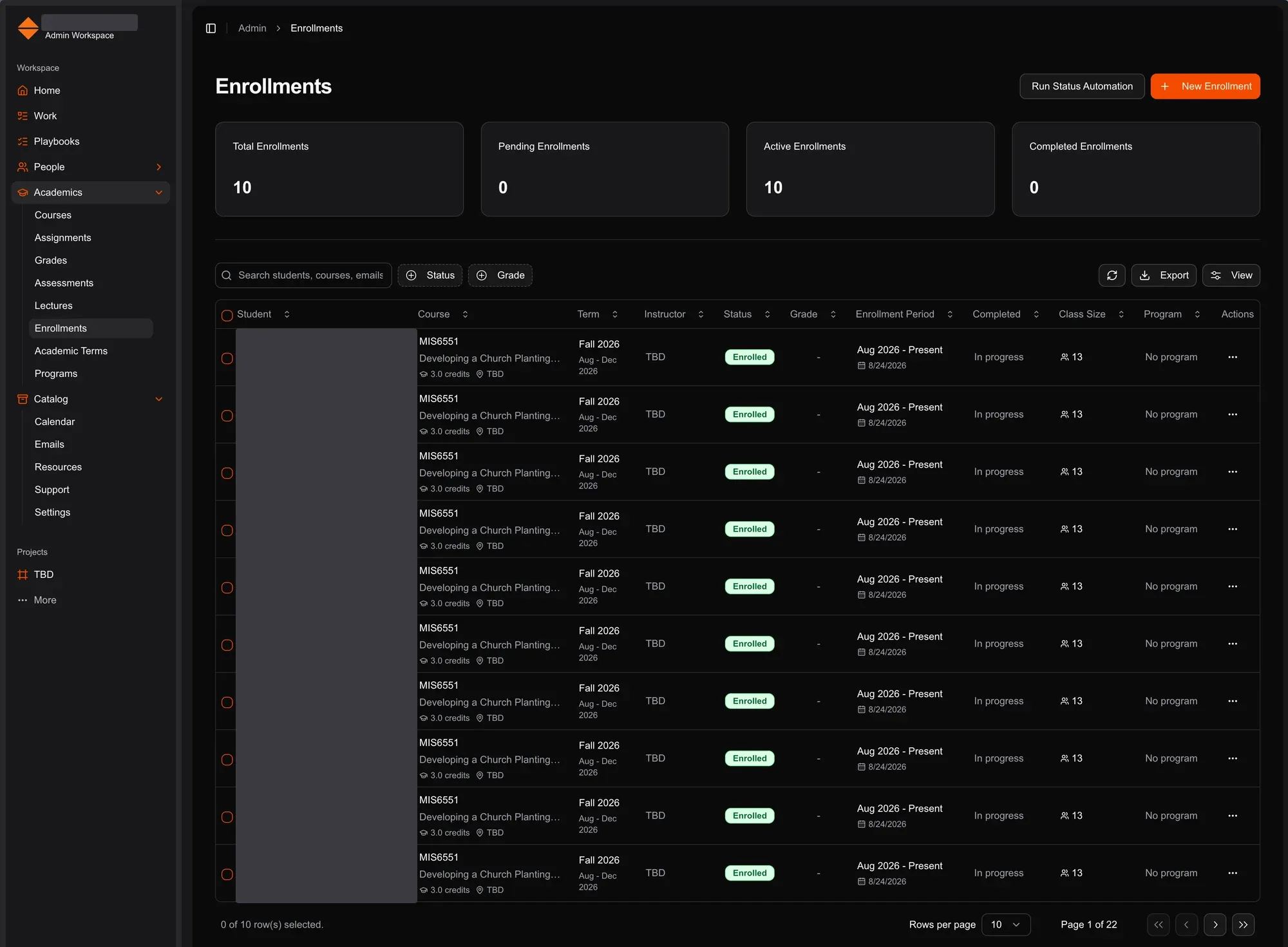
- Courses and programs
- Courses with offerings, enrollments, prerequisites and academic terms, grouped into programs with credit requirements.
- Assignments
- Rich text and file submissions, late policies, and rubric grading with feedback.
- Assessments
- Question banks, six question types, and timed, scheduled tests with automatic and manual grading.
- Lectures
- Video and audio with progress tracking, comments, and AI transcription.
- Support tickets
- Tickets with priorities, assignment, internal notes, and email updates.
- Calendar
- Recurring events, due dates that appear on their own, and reminders.
- Roles and access
- Administrators, instructors, students and residents each see and do only what they should.
- Templated messages for welcome, submissions, grades and support.
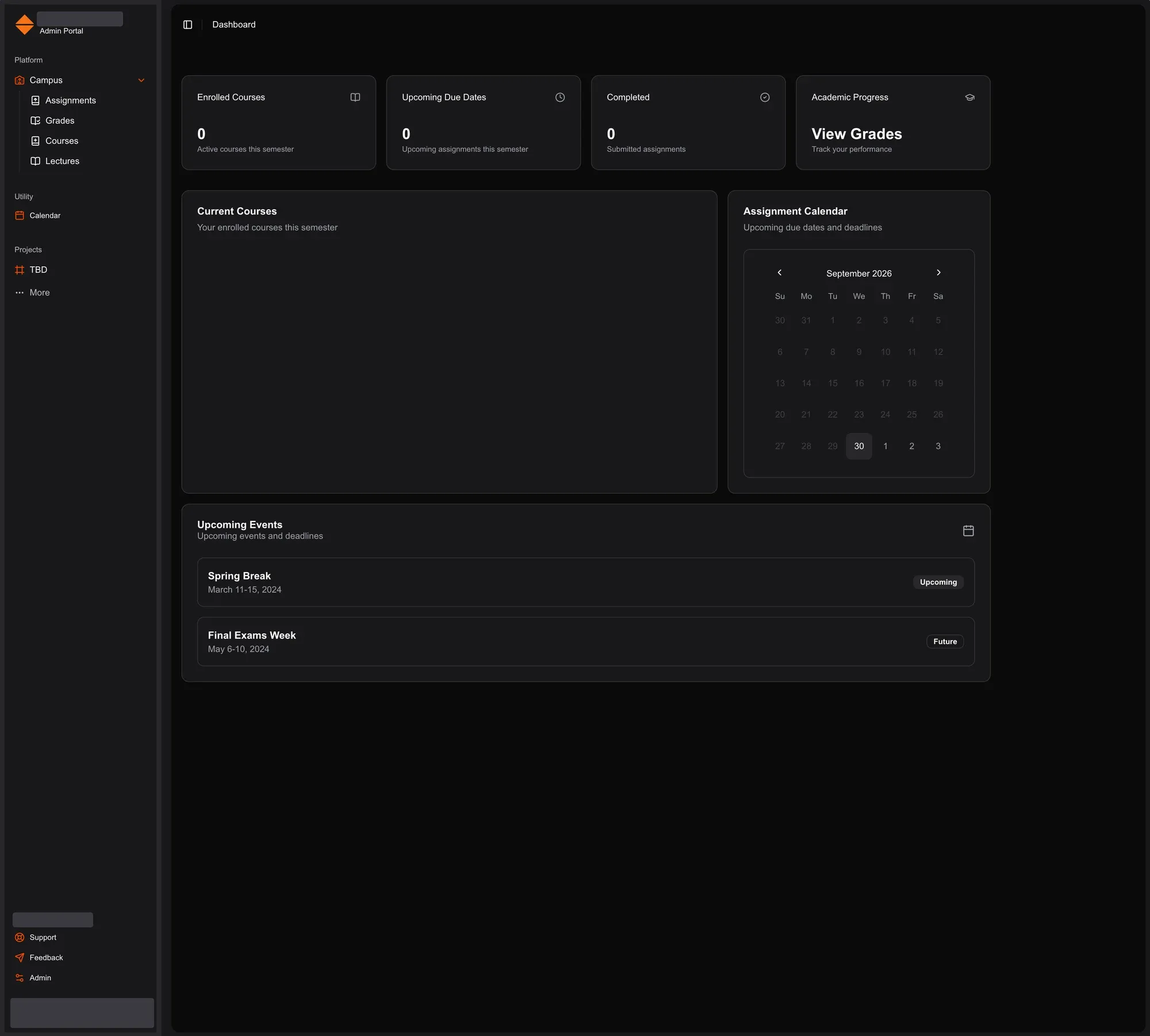
- Dashboards
- Progress, grades and engagement at a glance for staff and students.
How it is built
Student, instructor or administrator in a browser
Next.js application: pages, server actions, role checks
- PostgreSQLcourses, grades, tickets, events
- WorkOSsign-in and organizations
- Supabase Storageuploaded files and media
- Resendemail notifications
- AssemblyAIlecture transcription
- Front end
- Next.js (App Router)ReactTypeScriptTailwind CSSshadcn/ui
- Data and server
- PostgreSQLDrizzle ORMServer actionsZod validation
- Sign-in and organizations
- WorkOS AuthKit with single sign-on and multi-tenant support
- Services
- Resend for emailSupabase Storage for filesAssemblyAI for transcription
- Hosting
- Vercel
Screenshots
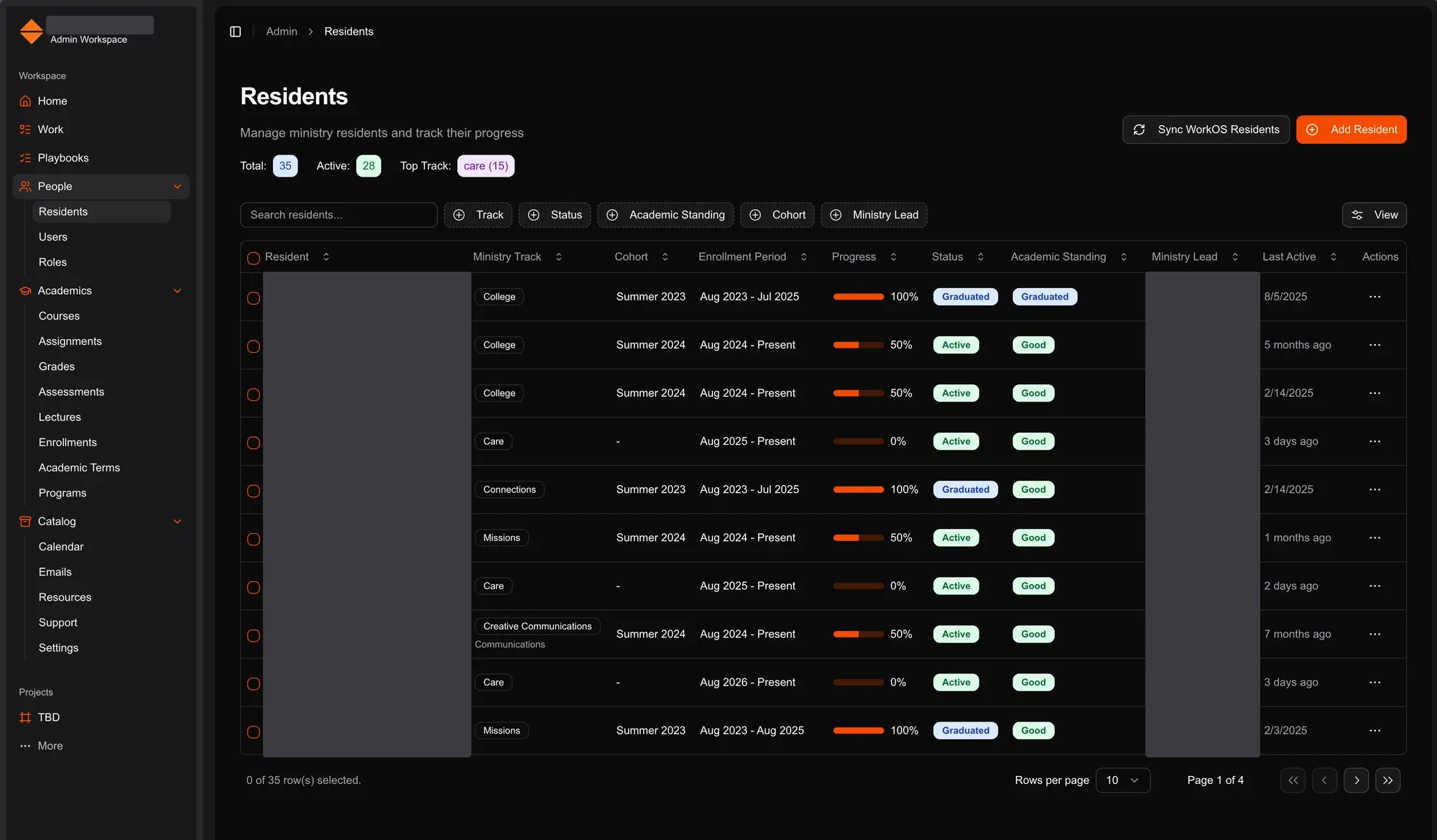
These are screenshots of the live product. Names, email addresses and the church's name are hidden.
Need something at this scope? Tell me what you are building.